
A Woman in Her 60s Ready to Feel Confident Again
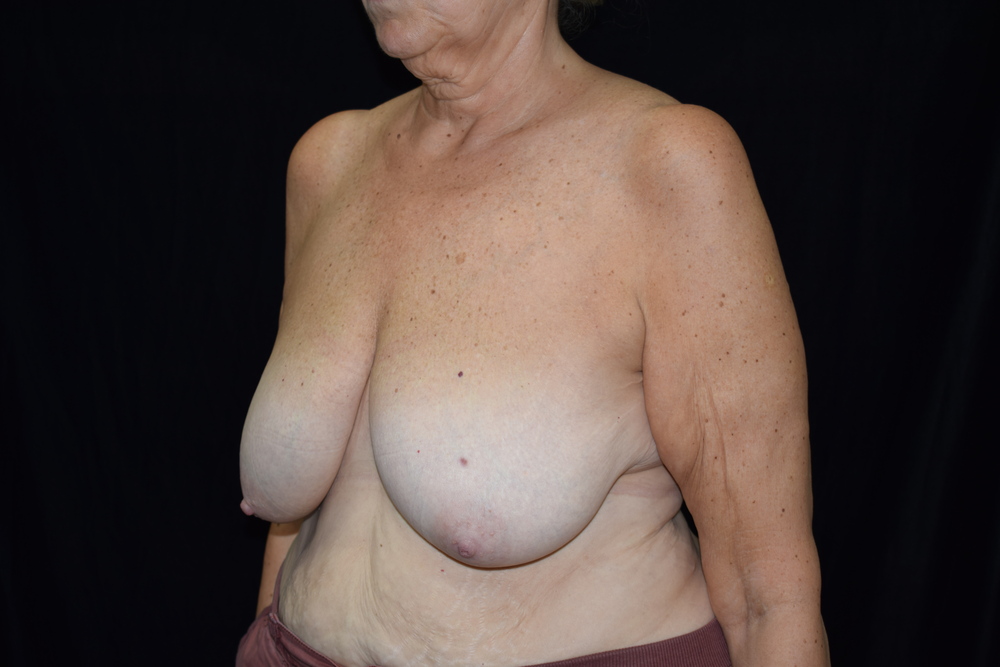
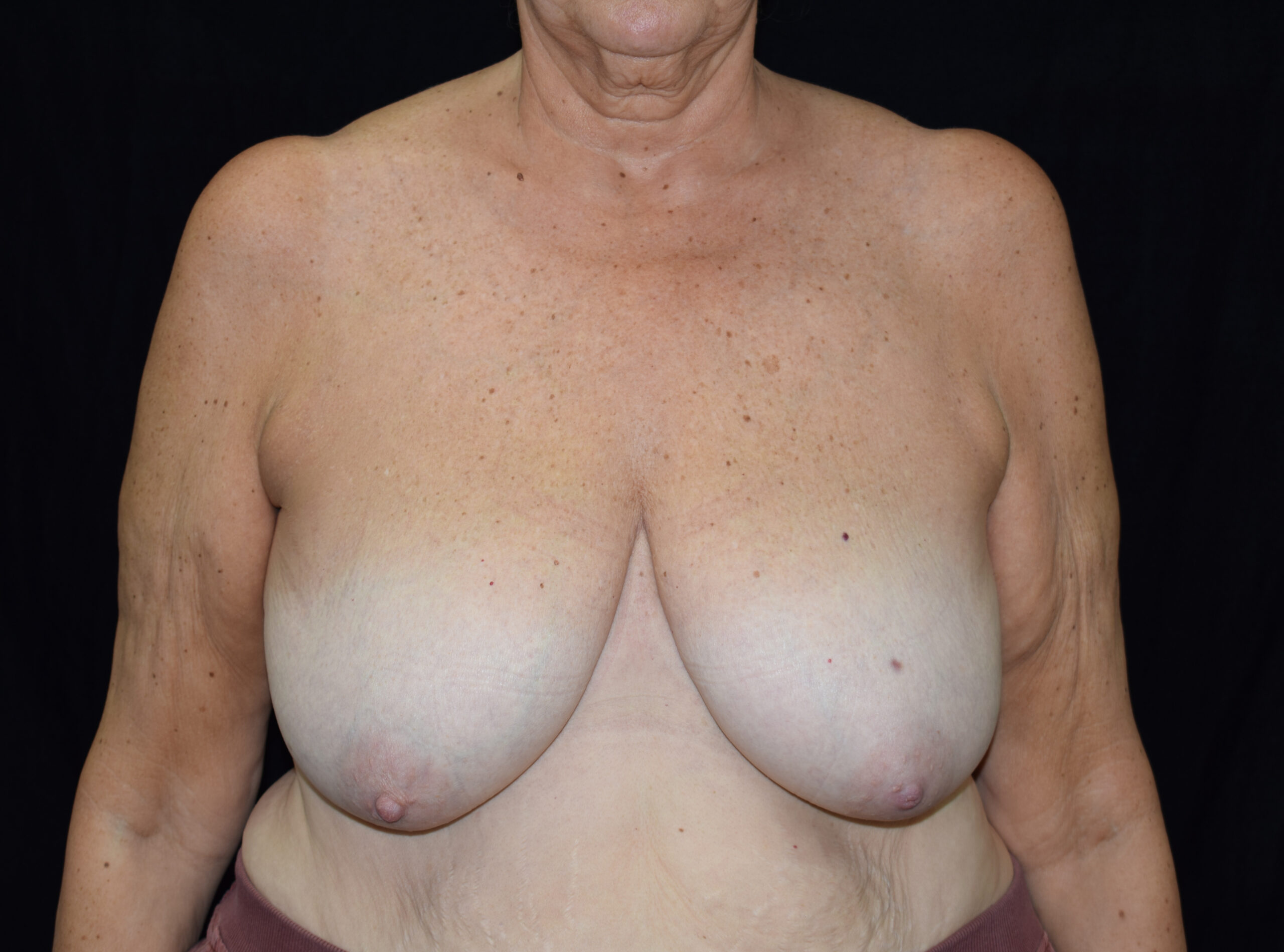
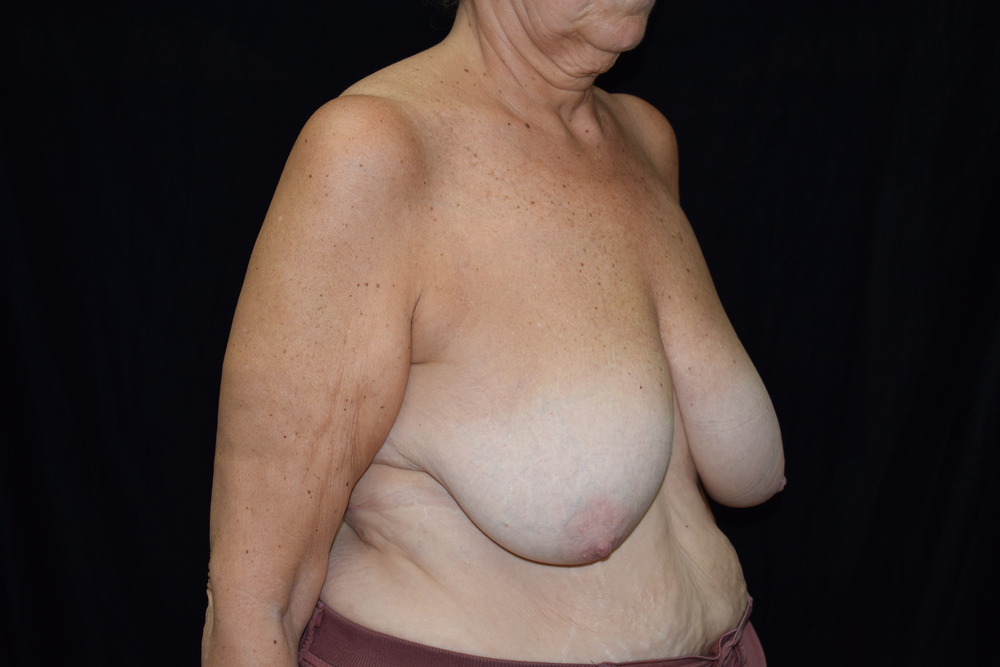
This patient came to Dr. Racanelli's New Jersey practice in her 60s with a straightforward goal: she wanted her breasts to look the way they did when she was younger. Over the decades, natural aging had caused her breast tissue to descend and her nipples to drop below where they once sat on the breast mound. She was unhappy with the positioning of her breasts overall and specifically with where her nipples and areolas had settled over time.
She was not seeking a dramatic transformation. She was not interested in adding volume or changing the fundamental character of her breasts. What she wanted was a restoration, perkier, more youthful-looking breasts with the nipple and areola repositioned to a natural height and the areola reduced to a more proportionate size.
Why Breast Position Changes With Age, and What Can Be Done About It
Breast ptosis, the medical term for breast drooping or descent, is a natural consequence of aging. Skin loses elasticity over time, the ligaments that support breast tissue gradually stretch, and gravity does the rest. For many women, this process accelerates after pregnancy, breastfeeding, or significant weight changes, but it happens to virtually every woman to some degree simply as a result of getting older.
The position of the nipple is one of the clearest indicators of ptosis. When the nipple descends below the natural breast crease or points downward rather than forward, a breast lift is typically the only procedure that will correct it. No cream, exercise, or non-surgical treatment repositions descended breast tissue or elevates a dropped nipple. A mastopexy does.
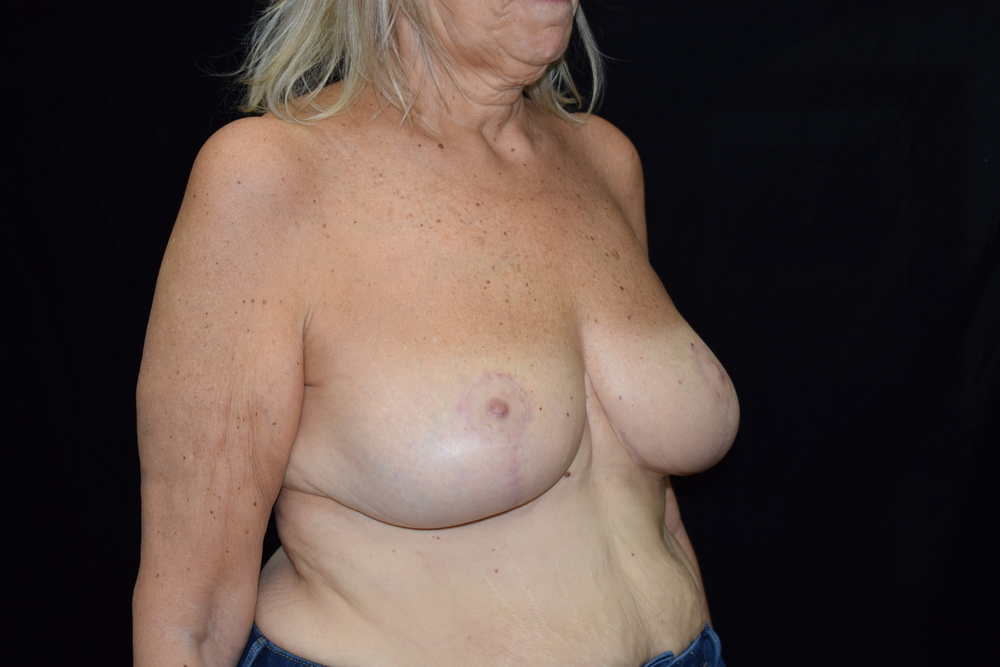
For this patient, a bilateral breast lift was the appropriate surgical plan because her concern was entirely about position, not volume. She had the breast tissue she wanted. She simply wanted it back where it belonged.
What Her Breast Lift with Dr. Racanelli Achieved
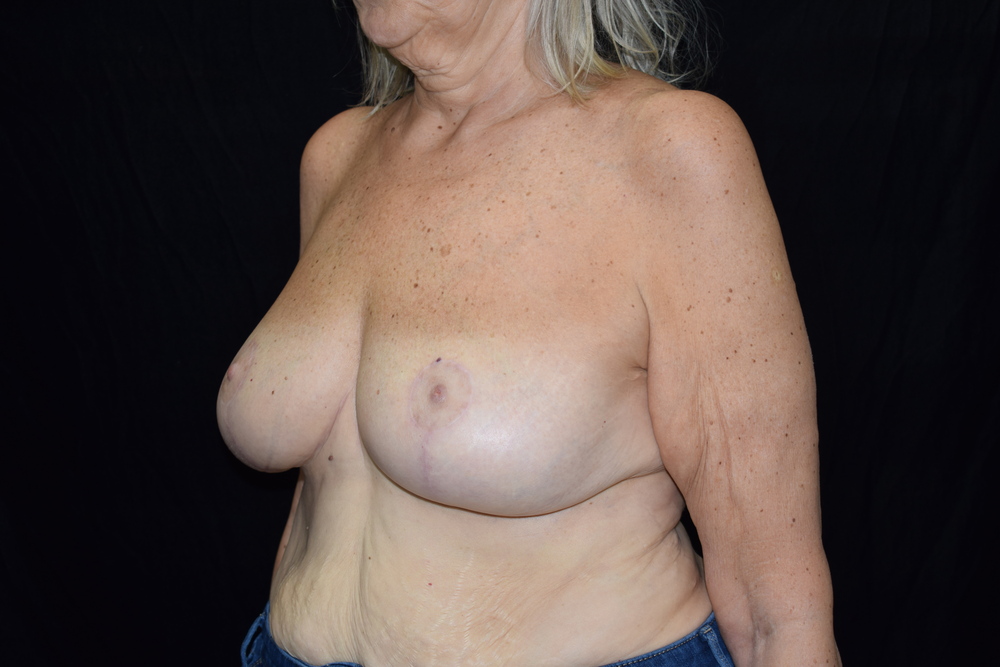
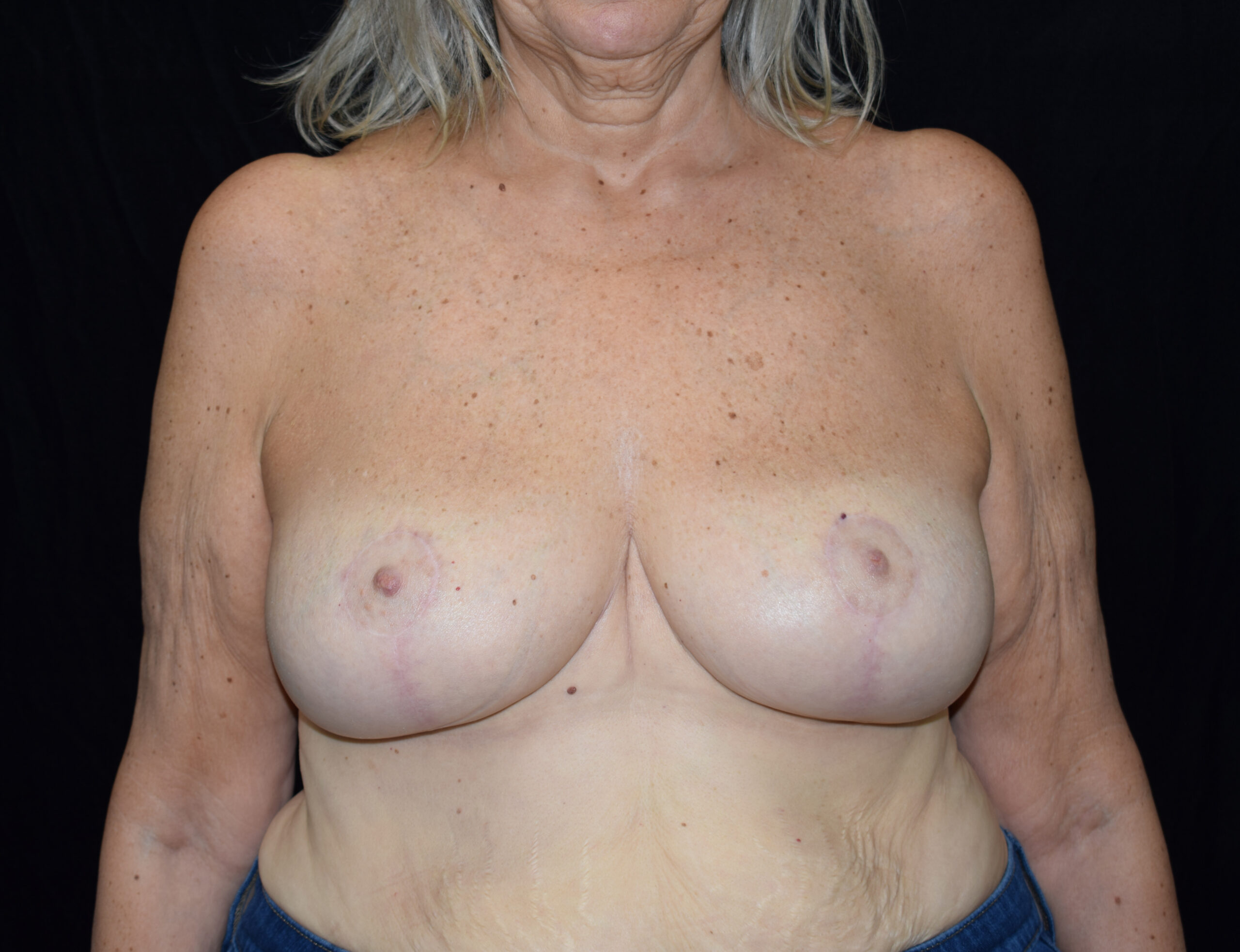
Following her bilateral breast lift, this patient achieved a meaningfully more youthful breast appearance. Her breast tissue was repositioned upward, her nipples were elevated to a natural position on the breast mound, and her areolas were reduced to a size proportionate to her overall breast contour.
The result was exactly what she came in looking for: breasts that reflect how she feels, not how many decades have passed. No implants were involved. The improvement came entirely from reshaping and repositioning what was already there, which is precisely what a well-planned mastopexy is designed to do.
For Women Who Want a Lift and Additional Volume
Some patients, particularly those who have experienced volume loss alongside descent, present to Dr. Racanelli wanting both a lift and an implant. In those cases, Dr. Racanelli stages the two procedures rather than combining them in a single surgery, a position he holds firmly based on his clinical experience:
"Although many plastic surgeons will perform a breast lift and an augmentation at the same time, I will not. I stage these procedures as I believe fundamentally they work against one another. The way to get a bad scar from plastic surgery is to place a lot of tension across the scar. In a breast lift, there is an inherent amount of tension designed in the procedure which actually lifts the breast. If you add an implant at the same time, you will essentially be doubling the tension across those incisions, leading to suboptimal scarring."
-- Dr. Joseph A. Racanelli, Board-Certified Plastic & Reconstructive Surgeon
For this patient, no augmentation was needed or desired. A lift alone delivered the outcome she was seeking.
About Dr. Joseph A. Racanelli
Dr. Joseph A. Racanelli is a board-certified plastic and reconstructive surgeon with offices in Morristown, Newark, and New York City. With more than two decades of practice and over 10,000 breast procedures performed, breast surgery is the foundation of his clinical work.
Every procedure is performed personally by Dr. Racanelli in a fully accredited hospital operating room with general anesthesia administered by a board-certified anesthesiologist. He operates one major case per day, and every postoperative follow-up visit is with Dr. Racanelli himself.
If you are considering a breast lift in New Jersey or New York, schedule a consultation with Dr. Racanelli to discuss your goals and learn what is achievable for your anatomy.