
Breast Procedures
Breast Reduction
Relief
Chronic discomfort
Balance
Natural proportions
Personal
Surgeon performed



Breast reduction surgery, formally known as reduction mammoplasty, removes excess breast tissue, fat, and skin to reduce breast size, relieve physical symptoms, and reshape the breast to a more proportional contour.
For many women, overly large breasts are not primarily a cosmetic concern, they are a daily physical burden. Chronic neck, back, and shoulder pain. Skin irritation and rashes beneath the breast fold. Grooves cut into the shoulders by bra straps. Difficulty exercising, finding clothes that fit, or simply moving through the day without discomfort. Breast reduction addresses all of these.
Dr. Joseph A. Racanelli is a board-certified plastic and reconstructive surgeon and serves as Chief of Plastic Surgery at Clara Maass Medical Center Barnabas Health. He performs every breast reduction personally, in a hospital operating room, with a board-certified anesthesiologist. Patients travel from throughout New Jersey and New York City to receive care at his practice.

A Level of Care You Won’t Find Elsewhere in NJ
About Breast Reduction
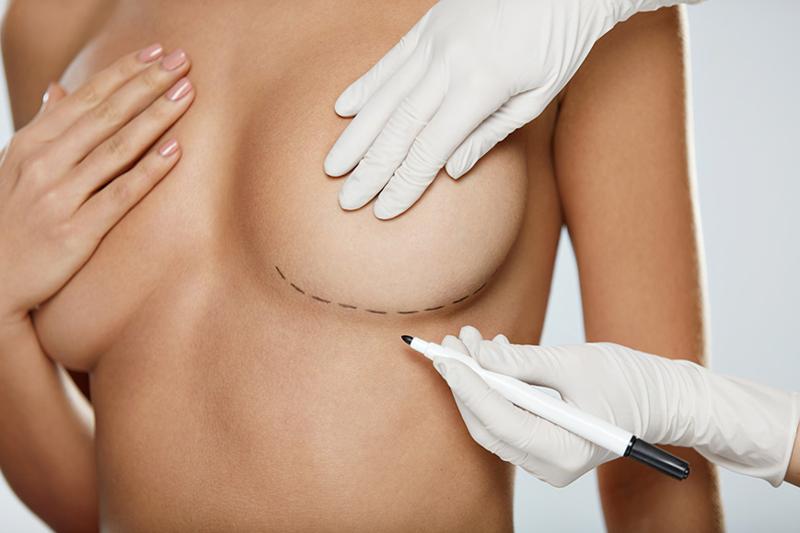
Breast reduction removes excess glandular tissue, fat, and skin through carefully planned incisions, then reshapes and lifts the remaining breast tissue to create a smaller, more proportional breast mound. In most cases, the nipple and areola are repositioned higher on the breast as part of the procedure.
Dr. Racanelli primarily uses the Wise pattern incision, commonly called the anchor incision, for breast reduction. This technique involves three incision lines: one around the areola, one vertically down the front of the breast, and one along the inframammary fold (the crease beneath the breast). Together they allow Dr. Racanelli to remove significant amounts of tissue, reposition the nipple, and reshape the breast with precision.
The Wise pattern is the most versatile approach for breast reduction because it accommodates a wide range of breast sizes and degrees of ptosis, and allows for the most control over final breast shape. For patients with very large breasts or significant asymmetry, this approach consistently delivers the most reliable results.
In some patients, Dr. Racanelli may also use liposuction to remove excess fat from the lateral breast and armpit area, creating a smoother contour and better definition at the edges of the breast. The specific technique used is determined at consultation based on your anatomy, degree of reduction needed, and aesthetic goals.
What Breast Reduction Addresses
Breast reduction produces both physical and cosmetic improvements and for most patients, the physical relief is transformative.
Physical benefits patients commonly experience:
- Relief from chronic neck, back, and shoulder pain caused by breast weight
- Elimination of shoulder grooving from bra straps
- Reduction or resolution of skin rashes and irritation beneath the breast fold
- Improved posture and core engagement
- Greater ease and comfort during physical activity
- Better fit in clothing, athletic wear, and swimwear
Cosmetic benefits include a smaller, lifted, more symmetrical breast contour that is proportional to the patient's frame. Asymmetry between breasts, which is common in patients with macromastia, can also be addressed during the procedure.
Many patients describe the results of breast reduction as among the most life-improving outcomes of any cosmetic procedure. Unlike purely aesthetic surgeries, reduction often resolves years of daily discomfort that patients had normalized.
Does Insurance Cover Breast Reduction?
Breast reduction is one of the few plastic surgery procedures that may qualify for partial reimbursement from insurance, but only under specific circumstances, and whether it applies to you depends entirely on your individual plan.
Dr. Racanelli's practice is out-of-network and does not participate directly with any insurance plans. This means we do not bill insurance on your behalf. However, patients who have out-of-network benefits through their own carrier may be able to submit a claim for reimbursement independently after surgery.
Whether your insurer reimburses any portion of the cost, and how much, depends on:
We strongly recommend contacting your insurance carrier directly before your consultation to understand your out-of-network benefits and what documentation they require for a medical necessity determination. We can discuss your symptoms and clinical picture at consultation, but the insurance determination is made by your carrier, not by our office.
For patients financing the procedure directly, we offer flexible payment options through Cherry.

Who Is a Good Candidate for Breast Reduction?
Most women seeking breast reduction are good candidates if they are experiencing physical symptoms from breast size, are at or near a stable weight, are in good overall health, and do not smoke.
You may be a strong candidate if you have:
Breast reduction may not be appropriate if you are planning a future pregnancy. Pregnancy can alter breast size and shape after surgery, which may affect results. Dr. Racanelli recommends waiting until you are finished having children before undergoing reduction. This is discussed directly at your consultation so you can make a fully informed decision about timing.
Patients who smoke must stop prior to surgery and remain smoke-free through the recovery period. Nicotine significantly impairs healing and increases the risk of wound complications, particularly for procedures involving significant skin excision.
What to Expect at Your Consultation
At your consultation, Dr. Racanelli will perform a physical examination of the breasts and review your medical history, current medications, and aesthetic goals. He will explain the surgical technique he recommends for your anatomy and the degree of reduction involved, and walk you through what the incisions will look like and where scars will be located.
He will also give you a clear picture of realistic outcomes, including what size range is achievable given your anatomy, how nipple position will be affected, and what the recovery involves. If insurance may be relevant to your situation, that conversation happens here as well.
You will leave your consultation with a complete surgical plan, personalized pre- and postoperative instructions, and a specific cost estimate. Every question you have, including ones that come up after you leave, can be directed to our office before your procedure date.
Preparing for Surgery
Before your procedure, Dr. Racanelli will provide a complete list of preoperative instructions tailored to your health history. Key preparation steps include:
The Procedure
Breast reduction is performed under general anesthesia in a fully accredited hospital operating room. Anesthesia is administered by a board-certified anesthesiologist, not a nurse anesthetist. Dr. Racanelli performs the procedure personally from start to finish.
Using the Wise pattern incision, Dr. Racanelli removes excess glandular tissue, fat, and skin, then reshapes the remaining breast tissue and repositions the nipple and areola to a higher, more youthful position on the breast. The incisions are then closed in multiple layers.
In patients with excess lateral breast tissue or fullness extending into the armpit area, Dr. Racanelli may use liposuction to refine the contour at the edges of the breast. This creates a cleaner, more defined result at the breast boundary and improves how clothing fits through the chest and underarm.
Surgery typically takes 2-4 hours depending on the degree of reduction and whether additional contouring is performed.

Recovery
Breast reduction is performed as an outpatient procedure, you will return home the same day as surgery, not stay overnight. Surgery takes place in a hospital operating room, not an outpatient surgical center.
Days 1-3: Expect swelling, bruising, and tenderness. Dr. Racanelli will prescribe medication to manage discomfort. Rest and limited arm movement are important during this period.
Days 4-7: Most patients are mobile and managing independently. A supportive surgical bra is worn to minimize swelling and protect healing tissue.
Weeks 2-3: Most patients with desk jobs return to work. Light daily activity is generally comfortable.
Weeks 4-6: Cleared for gradually increasing activity based on healing progress, assessed at your follow-up with Dr. Racanelli.
Every postoperative visit is with Dr. Racanelli personally, not a nurse practitioner or physician assistant.
Recovery
Results are visible immediately after surgery and continue to improve over several months as swelling resolves and the breast tissue settles into its final shape. Most patients are fully settled at 3-6 months.
Breast reduction results are long-lasting. The reduced size and improved contour are permanent in the sense that the removed tissue does not return. However, weight gain, pregnancy, and hormonal changes can all affect breast size and shape over time, which is why Dr. Racanelli recommends patients be at a stable weight and finished with childbearing before undergoing the procedure.
Changes in nipple sensation are possible following breast reduction. Most patients retain normal or near-normal sensation, though this varies. Dr. Racanelli discusses sensation outcomes candidly at consultation.
Cost of a Breast Reduction in New Jersey
The cost of breast reduction depends on surgical complexity, operative time, and the degree of tissue removal involved. A personalized quote is provided at your consultation after Dr. Racanelli has reviewed your anatomy and surgical plan.
Insurance reimbursement may be available for patients with out-of-network benefits whose reduction meets their carrier's criteria for medical necessity. See the insurance section above for details on how this process works.
For patients financing the procedure, we offer flexible payment options through Cherry. Visit our financing page for more information on how to apply and what to expect.

Why Choose Dr. Racanelli for Breast Reduction
Dr. Racanelli serves as Chief of Plastic Surgery at Clara Maass Medical Center Barnabas Health, a credential that reflects not just surgical experience, but leadership and peer recognition within the hospital system where he operates. He has performed breast reduction surgery throughout his 20+ year career and brings a depth of reconstructive and cosmetic expertise that informs every case.
Every procedure is performed personally by Dr. Racanelli in a hospital operating room with a board-certified anesthesiologist. He performs one major surgery per day and sees every patient personally at every postoperative visit. No other surgeons, residents, or physician assistants operate on his patients.
For a procedure where outcomes depend heavily on surgical judgment, how much tissue to remove, how to reshape the breast mound, how to position the nipple for the most natural result, this level of direct, experienced surgical involvement matters.
Frequently Asked Questions
Common Breast Reduction Questions
Will I have scars after breast reduction?
Yes. Breast reduction involves incisions that leave permanent scars. Using the Wise pattern technique, scars run around the areola, vertically down the front of the breast, and along the crease beneath the breast. These scars fade significantly over 12-18 months and are generally well-concealed by bras and swimwear. Scar quality depends heavily on closure technique and how the body heals, Dr. Racanelli's multi-layer closure approach is designed to minimize tension on the scar surface, which is the primary driver of wide or raised scarring.
Will I lose nipple sensation after breast reduction?
Changes in nipple sensation are possible. Most patients retain normal or near-normal sensation following reduction, but temporary numbness or altered sensation is common in the weeks after surgery as nerves recover. Permanent changes in sensation occur in a minority of patients. Dr. Racanelli discusses this at your consultation based on the degree of reduction planned.
Can I breastfeed after breast reduction?
Breast reduction may affect the ability to breastfeed, as the procedure can disrupt milk ducts and nerves involved in lactation. Some patients are able to breastfeed after reduction; others are not. If preserving breastfeeding ability is important to you, this needs to be discussed at consultation so it can be factored into surgical planning. This is also one of the reasons Dr. Racanelli recommends waiting until after childbearing to undergo the procedure.
How much tissue will be removed?
The amount removed depends on your anatomy, your starting size, and your goal size. Dr. Racanelli discusses this in terms of estimated cup size reduction and final breast proportions at your consultation. Insurance carriers that cover medically necessary reductions typically require a minimum gram amount of tissue removal, calculated by body surface area, this is addressed during consultation if insurance is relevant to your case.
What type of anesthesia is used?
General anesthesia, administered by a board-certified anesthesiologist in a fully accredited hospital operating room. Not a surgical center and not a nurse anesthetist.
When will I see my final results?
Significant improvement is visible immediately. Swelling resolves progressively over 3-6 months, and the final breast shape and position settle fully within that window. Scars continue to mature and fade for 12-18 months after surgery.
Does breast reduction also lift the breasts?
Yes. Breast reduction inherently includes a lift component, the procedure reshapes the breast mound and repositions the nipple to a higher position on the chest. Most patients find they no longer need a separate breast lift after reduction because the reshaping is built into the procedure.
Ready to Take the Next Step?
If you’re considering breast reduction in New Jersey, schedule a private consultation with Dr. Joseph A. Racanelli.
Relief, balance, and confidence are closer than you think — with a surgeon who is personally involved every step of the way.