
Blepharoplasty
Blepharoplasty – Eyelid Surgery
The eyes are often the first area of the face where age becomes noticeable. Excess skin on the upper eyelids can create a heavy, tired appearance, while puffiness and bags under the lower lids can make patients look older or more fatigued than they feel.
Blepharoplasty, eyelid surgery, addresses these changes by removing excess skin, fat, and tissue from the upper eyelids, lower eyelids, or both. The result is a refreshed, more alert appearance that looks natural rather than surgical.
Dr. Joseph Racanelli performs blepharoplasty at his plastic surgery practice serving New Jersey and New York City, with offices in Morristown, Newark, and Manhattan.
Eyelid enhancement
Upper and lower eyelid correction
Key concerns treated
Puffiness, wrinkles, bags, loose skin
Surgeon performed
Board-certified plastic surgeon, not delegated to staff
About Eyelid Surgery
What Is Blepharoplasty?
Blepharoplasty is a surgical procedure that removes or repositions excess skin, muscle, and fat from the eyelids. It can be performed on the upper eyelids, the lower eyelids, or both, depending on each patient's anatomy and goals.
Upper blepharoplasty addresses excess skin that folds over the lash line, creating a heavy or hooded appearance. In more significant cases, drooping skin can partially obstruct the upper visual field, making upper eyelid surgery both a cosmetic and functional procedure.
Lower blepharoplasty addresses puffiness, under-eye bags, and loose skin beneath the eyes. The surgery removes or redistributes fat and tightens the lower eyelid to create a smoother, more rested appearance.
The skin surrounding the eye is the thinnest on the face, which makes surgical technique and precision essential. Dr. Racanelli's training in facial anatomy as a board-certified plastic and reconstructive surgeon is directly relevant to the quality and safety of eyelid surgery outcomes.

About Dr. Racanelli
Dr. Racanelli's Approach to Eyelid Surgery
Eyelid surgery is one of the most technically demanding procedures in facial plastic surgery, precisely because the results are so visible and the margin for error is narrow. A brow that's positioned even slightly too high or too low after upper blepharoplasty will be immediately noticeable to the patient and everyone they meet.
Before I recommend surgery, I evaluate the entire upper face as a unit, not just the eyelid in isolation. Upper eyelid skin excess is sometimes compounded by brow ptosis, where a descending brow pushes excess skin downward. If the brow is the underlying issue, operating on the eyelid alone won't fully correct the problem. I'm honest with patients about this distinction because it affects what surgery actually makes sense for them.
For lower eyelid work, I assess whether the issue is primarily fat prolapse, skin laxity, or a combination of both, because the approach differs for each. When the problem is predominantly fat with good skin quality, a transconjunctival approach (incision hidden inside the lower lid) may be appropriate, leaving no external scar. When skin laxity is also present, a transcutaneous approach with careful skin excision is used.
The goal in every eyelid case is a result that looks rested and natural, not operated on. Patients should look like a refreshed version of themselves, not like they've had work done.

Upper vs. Lower Eyelid Surgery — What's the Difference?
Upper Blepharoplasty
Upper blepharoplasty removes excess skin from the upper eyelid that creates a heavy, hooded, or tired appearance. The incision is placed within the natural eyelid crease so it is virtually invisible once healed. In cases where drooping skin partially obstructs vision, upper blepharoplasty may also have functional benefits.
Common concerns addressed: Excess upper eyelid skin, hooded appearance, heavy or tired-looking eyes, partially obstructed vision from drooping skin.
Lower Blepharoplasty
Lower blepharoplasty addresses puffiness, under-eye bags, and loose skin beneath the eyes. Depending on anatomy, the approach may involve an incision just below the lower lash line (transcutaneous) or hidden entirely inside the lower lid (transconjunctival). The appropriate technique is determined during consultation.
Common concerns addressed: Under-eye bags, puffiness, loose or crepey lower eyelid skin, persistent tired appearance.
Combined Upper and Lower Blepharoplasty
Many patients benefit from addressing both the upper and lower eyelids in a single procedure. Combining upper and lower blepharoplasty allows for comprehensive eye rejuvenation with a single recovery period. Dr. Racanelli will assess your anatomy during consultation and recommend the approach that will produce the most balanced result.
Before & After
Gallery preview

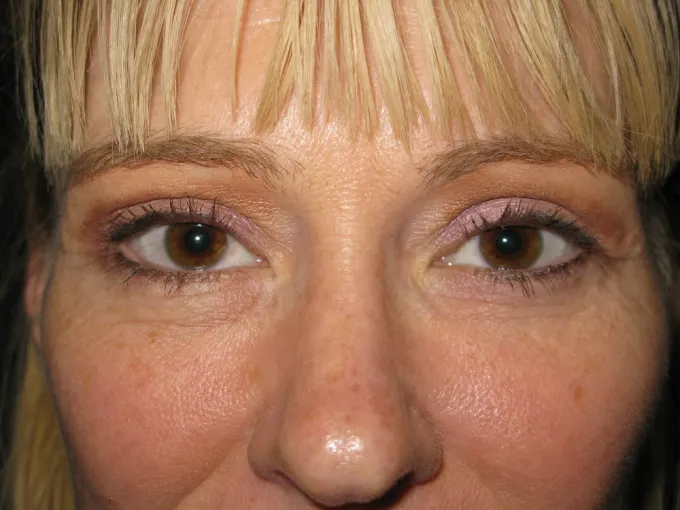
Real patient before and after photos, 100% unedited results.
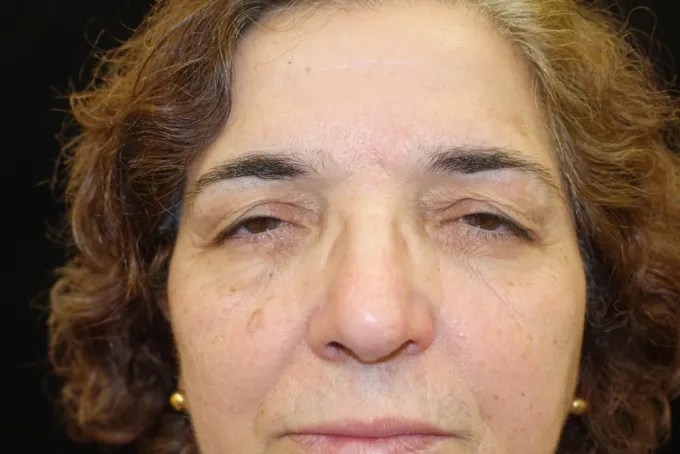
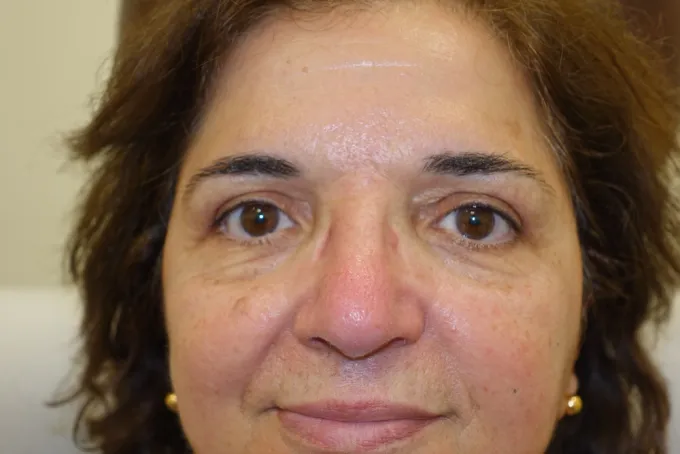
Real patient before and after photos, 100% unedited results.
Procedures in New Jersey
Why Patients Choose Eyelid Surgery
1
Minimal visible scarring
Blepharoplasty incisions are placed within the natural eyelid crease (upper) or just below the lash line or inside the lid (lower), making scars difficult to detect once healed.
2
Long-lasting results
The results of eyelid surgery are durable. While the face continues to age naturally, the improvement achieved through blepharoplasty typically lasts many years.
3
Cosmetic and functional benefits
For some patients with significant upper eyelid ptosis, blepharoplasty can improve peripheral vision in addition to cosmetic appearance, making it one of the few aesthetic procedures with a functional benefit.
Consultation
Your Consultation with Dr. Racanelli
Every blepharoplasty begins with a one-on-one consultation with Dr. Racanelli. During this meeting, he evaluates your eyelid anatomy, assesses whether upper eyelid, lower eyelid, or both require attention, and discusses whether any contributing factors, such as brow position, may affect the surgical plan.
You will leave the consultation with a clear understanding of what surgery is recommended, what the recovery involves, what the scar placement will be, and what results are realistic based on your specific anatomy.
Why Choose Dr. Racanelli for Eyelid Surgery
As a board-certified plastic and reconstructive surgeon, Dr. Racanelli brings comprehensive training in facial anatomy to every eyelid procedure. His surgical background, including training at Memorial Sloan Kettering, NewYork-Presbyterian/Weill Cornell, and a dedicated fellowship in plastic and reconstructive surgery, provides the anatomical foundation that eyelid surgery demands.
Blepharoplasty is performed personally by Dr. Racanelli. Consultations are unhurried, and surgical plans are individualized based on each patient's anatomy and goals rather than a one-size-fits-all approach.
Patients travel from throughout New Jersey and New York City for consultation, including from Morristown, Summit, Short Hills, Montclair, Hoboken, Jersey City, and Manhattan.
Who Is a Good Candidate for Blepharoplasty?
You may be a good candidate for eyelid surgery if you:
Blepharoplasty is not appropriate for patients with certain eye conditions, dry eye disease, or thyroid-related eyelid changes. Dr. Racanelli will review your full medical history during your consultation to confirm that surgery is safe and appropriate for you.
What to Expect After Eyelid Surgery
Days 1–3: Swelling, bruising, and some tightness around the eyes are normal. Cold compresses and keeping the head elevated help reduce swelling. Vision may feel slightly blurry if ointment has been applied.
Week 1–2: Most visible bruising resolves within 10–14 days. Sutures (if non-dissolvable) are typically removed within the first week. Most patients feel comfortable returning to social activities after 10–14 days, once bruising has faded.
Week 2–4: Residual swelling continues to decrease. Most patients return to office work and light activities within 1–2 weeks. Avoid strenuous exercise, heavy lifting, and bending for at least 2–3 weeks.
Month 1–3: Scars begin to soften and fade. The full result of eyelid surgery becomes increasingly apparent as all swelling resolves.
Long-Term: Results are long-lasting. While natural aging continues, the improvement achieved through blepharoplasty typically remains for many years.
Frequently Asked Questions
Common Blepharoplasty – Eyelid Surgery Questions
Will I have visible scars after eyelid surgery?
Upper blepharoplasty incisions are placed within the natural eyelid crease and are virtually invisible once healed. Lower blepharoplasty incisions are placed either just below the lower lash line or hidden entirely inside the lower lid. In both cases, scars are well-concealed and fade significantly over several months.
Is blepharoplasty covered by insurance?
Upper blepharoplasty that is performed to correct vision obstruction caused by drooping upper eyelid skin may be eligible for insurance coverage, depending on your provider and the degree of visual field impairment. Cosmetic blepharoplasty, performed purely for appearance, is not typically covered. Dr. Racanelli's team can provide documentation to support an insurance inquiry if functional impairment is present.
Can blepharoplasty be combined with other procedures?
Yes. Eyelid surgery is commonly combined with other facial procedures such as injectable treatments like Botox and fillers. Combining procedures can reduce overall recovery time and produce a more harmonious facial result. Dr. Racanelli will assess whether a combined approach makes sense during your consultation.
How long do the results of eyelid surgery last?
Blepharoplasty results are long-lasting. Upper eyelid results typically remain for 5–7 years or longer; some patients never require a second procedure. Lower eyelid results are generally permanent in terms of fat removal, though skin laxity may continue to develop with age.
What is the difference between blepharoplasty and a brow lift?
A brow lift elevates the position of the eyebrow itself, which can indirectly reduce the appearance of upper eyelid skin excess caused by a descending brow. Blepharoplasty directly removes excess skin from the eyelid. In some patients, the two procedures address different problems and may be appropriate together. Dr. Racanelli evaluates brow position during every upper eyelid consultation to ensure the correct procedure, or combination, is recommended.
How much does eyelid surgery cost in New Jersey?
The cost of blepharoplasty depends on whether upper eyelids, lower eyelids, or both are addressed, as well as operating room and anesthesia fees. A personalized cost estimate is provided during your consultation. Financing is available through Cherry for qualified patients.
Ready to Feel Like Yourself Again?
Schedule a consultation with Dr. Joseph Racanelli
Discuss your goals and personalized treatment plan with a surgeon who is directly involved every step of the way.